PREAMBLE AND SCOPE OF APPLICATION
These guidelines evaluate and summarise the available scientific evidence. Their aim is to support healthcare professionals in proposing the best diagnostic and therapeutic approach during central venous cannulation in critically ill patients. The guidelines were developed by the Expert Panel of the Polish Society of Anaesthesiology and Intensive Therapy (Polskie Towarzystwo Anestezjologii i Intensywnej Terapii – PTAiIT), in accordance with the Grading of Recommendations Assessment, Development and Evaluation (GRADE) methodology [1].
These guidelines are intended to support clinical decision-making and do not absolve healthcare professionals of their individual responsibility to make appropriate and accurate decisions tailored to each patient’s condition. The treating physician remains responsible for determining whether the recommendations are appropriate for the clinical context.
These guidelines were developed for critically ill adult patients admitted to intensive care units who require central venous catheter insertion. Application of the presented recommendations outside of this population requires individual clinical assessment.
Healthcare professionals are encouraged to consider and apply these PTAiIT guidelines when performing clinical assessments to determine and implement the optimal central venous access strategy for critically ill patients.
SUMMARY OF RECOMMENDATIONS
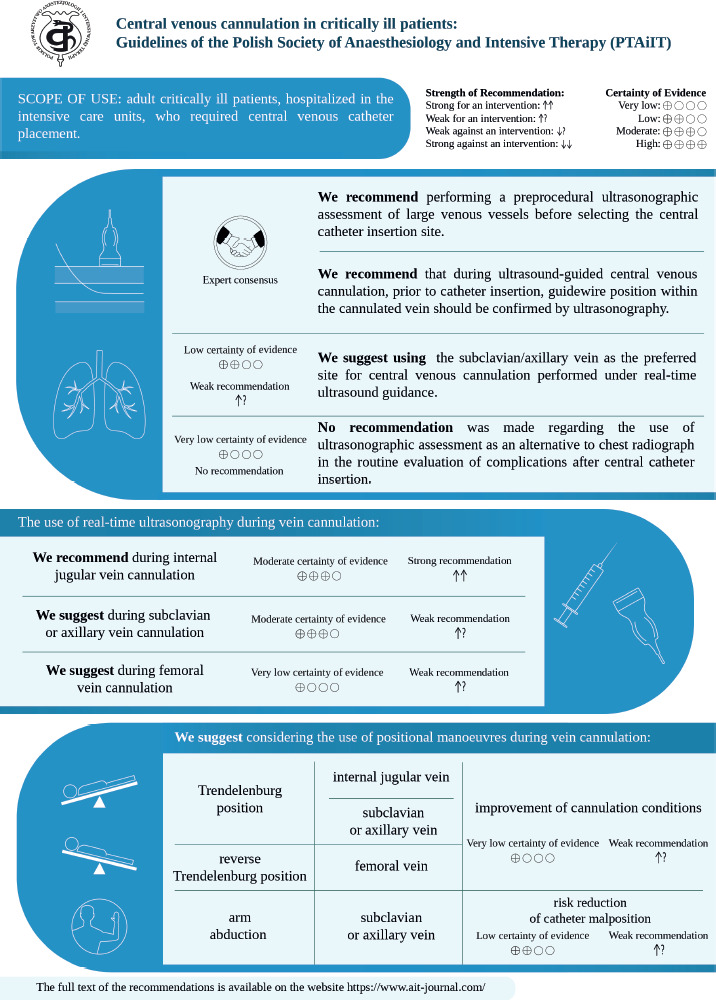
The strength of recommendations is presented in accordance with the GRADE methodology (Figure 1).
FIGURE 1
Central venous cannulation in critically ill patients according to the guidelines of the Polish Society of Anaesthesiology and Intensive Therapy (PTAiIT)
Preprocedural ultrasonographic assessment
We recommend performing a preprocedural ultrasonographic assessment of large venous vessels before selecting the central catheter insertion site (no direct evidence, expert consensus).
We recommend that during ultrasound-guided central venous cannulation, prior to catheter insertion, guidewire position within the cannulated vein should be confirmed by ultrasonography (no direct evidence, expert consensus).
Selection of vascular access site
We suggest using the subclavian/axillary vein as the preferred site for central venous cannulation, provided there are no contraindications or other factors influencing the choice of insertion site, and cannulation is performed under real-time ultrasound guidance (low certainty of evidence, weak recom- mendation).
Cannulation technique – ultrasonography versus landmark technique
We recommend the use of real-time ultrasonography during internal jugular vein cannulation instead of the landmark technique (moderate certainty of evidence, strong recommendation).
We suggest using real-time ultrasonography during subclavian/axillary vein cannulation instead of the landmark technique (moderate certainty of evidence, weak recommendation).
We suggest using real-time ultrasonography during femoral vein cannulation instead of the landmark technique (very low certainty of evidence, weak recommendation).
Role of positional manoeuvres
We suggest considering the use of the Trendelenburg position (in the absence of contraindications) to improve cannulation conditions of the internal jugular vein (very low certainty of evidence, weak recommendation).
We suggest considering the use of the Trendelenburg position (in the absence of contraindications) to improve cannulation conditions of the subclavian/axillary vein (very low certainty of evidence, weak recommendation).
We suggest considering the use of the reverse Trendelenburg position (in the absence of contraindications) to improve cannulation conditions of the femoral vein (very low certainty of evidence, weak recommendation).
We suggest considering the use of arm abduction during subclavian/axillary vein cannulation with real-time ultrasonography to reduce the risk of catheter malposition (low certainty of evidence, weak recommendation).
INTRODUCTION
Insertion of central venous catheters (CVCs) is one of the most frequently performed invasive procedures in intensive care units (ICUs). Despite its widespread use, this procedure carries a risk of complications, such as pneumothorax, inadvertent arterial puncture, perivascular haematoma, catheter-related infection, or thrombosis [2]. In recent years, ultrasonography (US) in many specialties, including anaesthesiology and intensive therapy, has become the standard in daily clinical practice, as it has significantly improved the safety and effectiveness of many invasive procedures [3, 4].
One of the main objectives of these guidelines is to present evidence-based recommendations regarding the use of US during CVC insertion in critically ill patients. This document aims to define procedures in which US guidance should be the standard of care, as well as those procedures in which the evidence for its superiority over other techniques is insufficient. The final decision to comply with the recom mendations rests with the treating physician and should be made taking into account the individual needs of the patient, their safety, available resources, and local and national regulations.
METHODS
Expert panel
PTAiIT appointed MZ as the Chair of the Working Group (WG) of the Expert Panel (EP) and TC and RG as Vice-Chairs of this group. The methodological team was chaired by WS and ZP. Other members of the methodological group included JT, TK, and MM. These individuals formed the team responsible for conceptualisation, development, and analysis of scientific evidence, which was subsequently presented to the remaining EP members. A total of 15 persons were appointed to the EP. All individuals had voting rights in the formulation of recommendations. To ensure the multidisciplinary nature and inclusivity of the EP, the panel included specialists in anaesthesiology and intensive therapy, specialists in anaesthetic and intensive care nursing, and trainees in anaesthesiology and intensive therapy. Furthermore, the panel also included individuals affiliated with both university and non-university hospitals.
In order to incorporate the patient perspective, the WG submitted an official request to the Polish Patient Rights Ombudsman to identify an association or organisation of patients previously hospitalised in the ICUs. At the time of document development, no such association could be identified in Poland, which precluded the direct inclusion of this type of patient representation in the guideline development process.
Recommendations were developed in accordance with the GRADE (Grading of Recommendations Assessment, Development, and Evaluation) methodology, a standard framework for assessing the quality of scientific evidence and formulating recommendations [1]. Key clinical problems were identified in the form of PICO questions (Population, Intervention, Comparison, Outcomes).
Conflict of interest
During the composition of the EP, all financial and intellectual potential conflicts of interest were collected and analysed. Individual EP members had previously been associated with scientific publications concerning central venous cannulation, and one EP member was affiliated with companies manufacturing central venous catheters (Supplement 1).
Definitions
To ensure the consistency and transparency of the recommendations, the following definitions were adopted:
Critically ill patient – in the context of these guidelines, this term refers to an adult patient admitted to an ICU who requires central venous catheter insertion.
Ultrasound-guided procedure – a procedure in which real-time US imaging is used to guide the needle towards the target vessel.
Long-axis imaging (long-axis view) – an ultra-sound imaging technique in which the transducer is aligned with the longitudinal axis of the vessel, allowing the vessel to be visualised along its length.
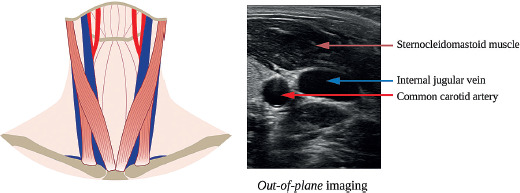
Short-axis imaging (short-axis view) – an ultra-sound imaging technique in which the transducer is oriented perpendicular to the longitudinal axis of the vessel, allowing the vessel to be visualised in cross-section.
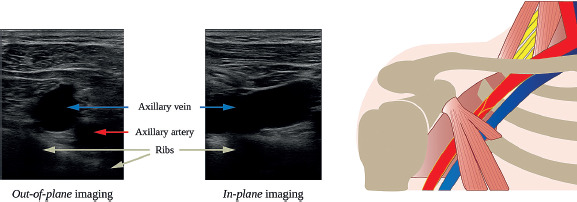
In-plane cannulation – a needle insertion technique that allows visualisation of the needle along its entire length within the transducer imaging plane.
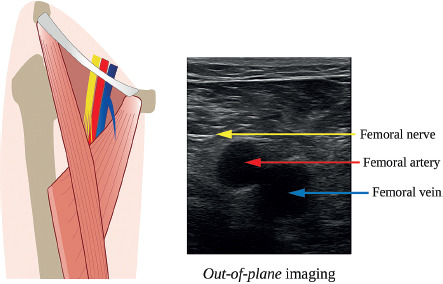
Out-of-plane cannulation – a needle insertion technique perpendicular to the transducer imaging plane.
Pre-scanning – preprocedural ultrasonographic assessment of the patient’s vascular anatomy, including vessel localisation, depth, and diameter, and identification of any anomalies or pathologies (e.g., thrombosis).
Landmark technique – a method of central venous cannulation in which the puncture site and needle insertion direction are determined based on palpable or visually identified anatomical landmarks.
Subclavian/axillary vein terminology
In these guidelines, the term “subclavian/axillary vein” is used to refer collectively to the subclavian and axillary veins. Anatomically, the subclavian vein is a direct continuation of the axillary vein, with the lateral border of the first rib serving as the boundary between them [5]. In the literature on central venous cannulation via the subclavian approach, these terms (subclavian vein and axillary vein) are often used interchangeably [6]. This is also confirmed by the results of studies included in the meta-analyses concerning this method of central venous cannulation. The expert panel recognises the need for precise use of anatomical nomenclature and standardisation of terminology. Nevertheless, the systematic review conducted encompassed publications in which both nomenclatures were frequently used interchangeably, which justifies the adoption of the combined notation to cover the entire available evidence base.
Development of clinical questions and prioritisation of endpoints
Key clinical problems were identified and formulated as PICO questions. The EP Chair, together with the members of the methodological group, guided the selection of specific clinical questions (PICO) for analysis towards the most important issues related to central venous catheter insertion in patients admitted to the ICU (Table 1). At the same time, it was agreed that the guidelines should focus exclusively on those questions for which there was a realistic chance of obtaining answers in the available literature and on those that could contribute most to improving the quality of care for critically ill patients. The panellists also prepared a list of the most important endpoints, which were evaluated within specific PICO questions (Supplement 2). Endpoints were ranked by voting according to their clinical relevance and importance to the patient. Due to insufficient scientific data, some endpoints were not subjected to analysis (Supplement 2).
TABLE 1
Clinical questions posed in the guidelines
Scientific evidence – systematic reviews and meta-analyses
For all clinical questions (Table 1), systematic reviews with meta-analyses were conducted whenever feasible. First, the WG conducted a literature review to identify high-quality systematic reviews that could serve as a basis for preparing the results. Upon identification of such reviews, they were updated through a systematic literature search for new studies. In the absence of existing high-quality systematic reviews, the WG prepared its own systematic review with meta-analysis. Wherever possible, only randomised controlled trials (RCTs) were included. In the absence of such trials, observational studies were analysed. When neither a systematic review nor relevant scientific studies allowing the creation of a meta-analysis were identified, the WG decided that the specific question would be subjected to voting based on expert consensus.
Using medical research databases (PubMed, EMBASE, and Cochrane Library), standardised search strategies (Supplement 3) were applied to identify potentially relevant publications, which were subsequently analysed using the Rayyan software with independent, blinded screening. Furthermore, after final inclusion of studies, a risk-of-bias assessment was performed for each study. For randomised controlled trials, the Risk of Bias-2 (RoB-2) tool [7] was used; for diagnostic studies, the Quality Assessment of Diagnostic Accuracy Studies 2 (QUADAS-2) scale [8] was used; and for publications evaluating the effect of positioning on cannulation conditions, a custom study quality assessment tool was designed. Finally, meta-analyses were conducted using RevMan v.5.3 software.
Certainty of evidence and pathway to recommendations
Recommendations were developed in accordance with the GRADE Evidence-to-decision methodology, which is a standard process for assessing the quality of scientific evidence and formulating recommendations [1]. Under this approach, in addition to the results of systematic reviews themselves, the balance between desirable and undesirable outcomes was also considered, as were the preferences and views of healthcare professionals, and issues concerning healthcare resource utilisation, acceptability of given interventions, and their potential feasibility.
The formulation of recommendations was designed so that “strong” recommendations contained the words “we recommend”. For weak recommendations, the words “we suggest” were used. The rationale for using such wording is presented in Table 2.
TABLE 2
Meaning of the wording used in the guidelines (from GRADE guidelines) [1]
Voting
The expert panel was familiarised with, and subsequently addressed, the content of all recommendations. To this end, two teleconferences with all EP members were planned and conducted, during which the results of systematic reviews and meta-analyses were presented and the proposed recommendations formulated by the WG were discussed. EP consensus was defined as 80% agreement among at least 75% of the panel members.
For clinical questions for which it was not possible to prepare systematic reviews, recommendations were formulated on the basis of expert consensus. The process was conducted using the Delphi method [9].
GUIDELINES
Preprocedural ultrasonographic assessment
Recommendation
We recommend performing a preprocedural ultrasonographic assessment of large venous vessels before selecting the central catheter insertion site. (No evidence, expert consensus)
Expert consensus
No direct or indirect evidence was identified to assess this clinical problem. To ensure a reliable clinical assessment in the absence of empirical data, the recommendation was formulated on the basis of expert consensus. Accordingly, the EP participated in two rounds of anonymous evaluation and submission of their opinions regarding preprocedural ultrasonographic assessment.
The expert panel unanimously agreed that pre-procedural US assessment of large venous vessels (understood as a thorough evaluation of the patient’s vascular anatomy, including vessel localisation, depth, and diameter, as well as any anatomical abnormalities) before selecting the central catheter insertion site can significantly improve the efficacy and safety of central venous cannulation (66.7% – strongly agree; 33.3% – agree). It was also agreed that the positive aspects associated with preprocedural US assessment outweigh the risk associated with additional time burden and consumption of additional resources (84.6% – strongly agree; 15.4% – agree). Furthermore, the EP agreed that such preprocedural US assessment should apply to all patients (61.5% – strongly agree; 23.1% – agree; 15.4% – disagree). At the same time, some panel-lists indicated that US skills may constitute a significant barrier to implementing this recommendation (46.2% – agree; 7.7% – no opinion; 46.2% – disagree). During the discussion, the following issues were raised:
1) vascular assessment under US guidance requires skills but is characterised by a steep learning curve, enabling rapid competency acquisition;
2) implementation of this recommendation requires only minimal US skills;
3) the completion of the specialisation programme in anaesthesiology and intensive therapy requires acquisition of skills in ultrasound-guided vascular cannulation; therefore, the EP does not anticipate problems with implementation of this recommendation.
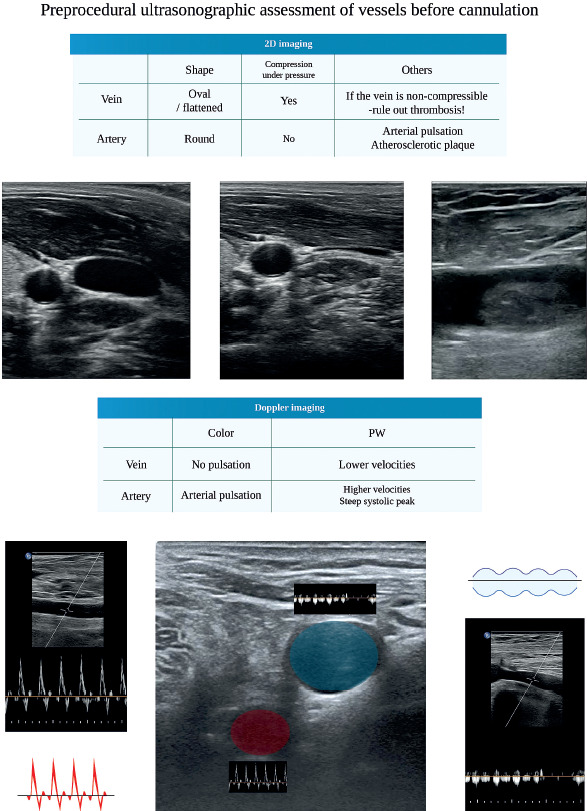
In summary, the EP agreed that preprocedural ultrasonographic assessment of large venous vessels should be performed before selecting the central catheter insertion site (Figure 2).
Remarks
None.
Differentiation of venous from arterial vessels using 2D (two-dimensional) and Doppler imaging (colour, PW – pulsed wave).
(A) Vein with an oval shape, artery round with a visible atherosclerotic plaque, located centrally.
(B) Tissue compression – visible collapse of the vein under pressure; the artery did not change its shape.
(C) Venous vessel in long axis – visible thrombus in the lumen (hyperechogenic area).
(D) Identification of the artery using pulsed-wave Doppler (PW) – steeply rising peak in the systolic phase – US image and diagram.
(E) Comparison of PW Doppler tracing for the vein (blue colour) and artery (red colour).
(F) Identification of the vein using pulsed-wave Doppler (PW) – regular flow, without significant accelerations – US image and diagram.
Ultrasonographic confirmation of intravascular guidewire position during central venous cannulation
Recommendation
We recommend that during ultrasound-guided central venous cannulation, prior to catheter insertion, guidewire position within the cannulated vein be confirmed by ultrasonography. (No evidence, expert consensus)
Expert consensus
No direct or indirect evidence was identified to assess this clinical problem. To ensure a reliable clinical assessment in the absence of empirical data, the recommendation was formulated on the basis of expert consensus. Accordingly, the EP participated in two rounds of anonymous evaluation and submission of their opinions regarding ultrasono-graphic confirmation of intravascular guidewire position during central venous catheterisation.
The expert panel unanimously agreed that ultrasonographic confirmation of intravascular guidewire position during central venous cannulation can significantly improve the efficacy and safety of the procedure (46.2% – strongly agree; 53.8% – agree). It was also agreed that the positive aspects associated with ultrasonographic confirmation of proper guidewire position outweigh the risk associated with additional time burden and consumption of additional resources (61.5% – strongly agree; 38.5% – agree). Furthermore, the EP was of the opinion that ultrasonographic assessment should apply to all patients (61.5% – strongly agree; 23.1% – agree; 7.7% – no opinion; 7.7% – disagree). At the same time, panellists indicated that US skills may constitute a significant barrier to implementing this recommendation (15.4% – strongly agree; 46.2% – agree; 7.7% – no opinion; 30.8% – disagree). During the teleconference discussion, the following issues were raised:
1) vascular assessment under US guidance requires skills but is characterised by a steep learning curve, meaning that the competency acquisition process is relatively rapid;
2) implementation of this recommendation requires only minimal US skills;
3) the specialisation programme in the field of anaesthesiology and intensive therapy in Poland requires acquisition of skills in ultrasound-guided central venous cannulation; therefore, the EP does not anticipate problems with implementation of this recommendation. Through discussion, a decision was also made that the recommendation text should also include a statement that confirmation of guidewire position may apply only to those cannulations in which real-time US was used.
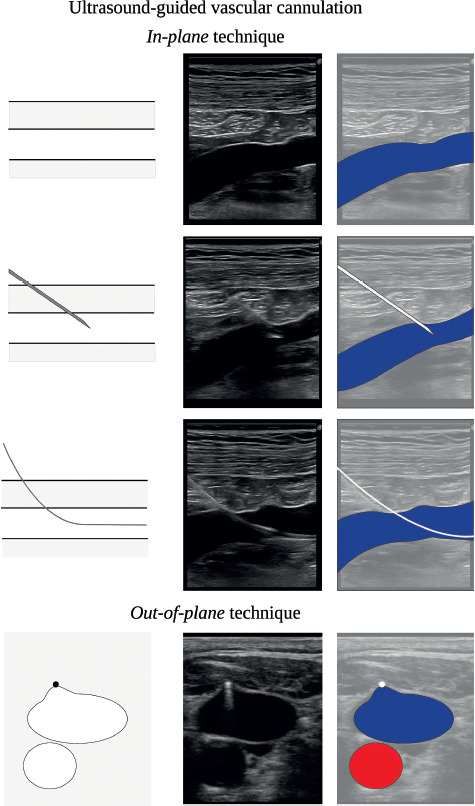
In summary, the EP agreed that during ultra-sound-guided central venous cannulation, prior to catheter insertion, guidewire position within the cannulated vein should be confirmed by ultra-sonography (Figure 3).
FIGURE 3
Application of ultrasonography in vascular cannulation. A–C) In-plane technique: A) visualisation of the vein in long axis, B) needle insertion into the vein, C) confirmation of guidewire position within the vessel. D) Out-of-plane technique: visualisation of the vein in short axis; the needle (white colour) was inserted into the vein (blue colour); the artery (red colour) was not punctured
Selection of vascular access site
Recommendation
We suggest using the subclavian/axillary vein as the preferred site for central venous cannulation, provided there are no contraindications or other factors influencing the choice of puncture site, and cannulation is performed under real-time US guidance. (Low certainty of evidence, weak recommendation).
Summary of evidence
The Working Group identified the following meta-analysis: Sakuraya M, Okano H, Yoshihiro S, Niida S, Kimura K. Insertion site of central venous catheter among hospitalized adult patients: a systematic review and network meta-analysis. Front Med (Lausanne) 2022; 9: 960135. This systematic review [10] was found to include a rigorous screening process. Accordingly, the studies contained within this review were extracted, and additionally all studies published after 2022 were included. Only randomised controlled trials were included, as were studies in which US was used and those in which the landmark technique was used during cannulation. Risk of bias was assessed using the RoB-2 tool.
To determine the most preferred central puncture site, three analyses were conducted:
In total, 9 randomised controlled trials [11–19] were identified, of which 3 were identified through the update after 2022 [17–19]. Of these 9 studies, 2 analysed more than two insertion sites [13, 14]. Eight studies concerning the internal jugular vein versus the subclavian/axillary vein [12–19] were identified, 2 studies concerning the subclavian/axillary vein versus the femoral vein [11, 14], and 1 study concerning the internal jugular vein versus the femoral vein [14].
FIGURE 4
Internal jugular vein. Anatomical diagram of the internal jugular vein position in short-axis view
Internal jugular vein versus subclavian/axillary vein
The choice of the internal jugular vein compared with the subclavian/axillary vein is associated with more than a twofold increase in the risk of catheter-related infections (relative risk [RR] 2.09; 95% confidence interval [95% CI]: 1.04–4.18; moderate certainty of evidence), with more than a threefold increase in the risk of thromboembolic complications (RR 3.44; 95% CI: 2.11–5.61; very low certainty of evidence). When US imaging was used, the choice of the subclavian/axillary vein was not significantly associated with an increased risk of pneumothorax compared with the choice of the internal jugular vein (RR 0.58; 95% CI: 0.12–2.86; moderate certainty of evidence). When the landmark cannulation technique was used, the risk of pneumothorax was significantly higher (approximately threefold) with the choice of the subclavian/axillary vein (RR 0.28; 95% CI: 0.10–0.74; very low certainty of evidence). There is no evidence of superiority of the internal jugular vein or the subclavian/axillary vein with regard to the risk of inadvertent arterial puncture regardless of whether US imaging or the landmark technique was used (RR 0.98; 95% CI: 0.51–1.90; very low certainty of evidence). When mortality was considered, a borderline statistical significance was obtained indicating the superiority of the subclavian/axillary vein compared with the internal jugular vein (RR 1.20; 95% CI: 1.00–1.44; very low certainty of evidence). It should be noted, however, that in the only study included in the mortality analysis [14], mortality was not defined as an endpoint, and therefore this result should be interpreted with caution. The complete set of results is available in Supplement 4.
Internal jugular vein versus femoral vein
No significant difference was found in the frequency of catheter-related infections between the internal jugular vein and the femoral vein (RR 1.39; 95% CI: 0.72–2.69; very low certainty of evidence). The direction of the 95% CI, however, indicates a potential advantage of the femoral vein in terms of reducing the risk of catheter-related infections. Similarly, no significant difference was found in the frequency of thromboembolic complications between the internal jugular vein and the femoral vein (RR 1.25; 95% CI: 0.91–1.73; very low certainty of evidence). The direction of the 95% CI also indicates a potential advantage of the femoral vein in terms of reducing the risk of thromboembolic complications. No significant difference was found in the frequency of early mechanical complications between the internal jugular vein and the femoral vein (RR 1.85; 95% CI: 0.74–4.62; very low certainty of evidence). In this case as well, the direction of the 95% CI indicates a potential advantage of the femoral vein in terms of reducing the risk of early mechanical complications. For mortality, a borderline statistical significance was noted indicating a slight advantage of the femoral vein in determining mortality risk compared with the internal jugular vein (RR 1.16; 95% CI: 0.99–1.36; very low certainty of evidence). The complete set of results is available in Supplement 4.
Subclavian/axillary vein versus femoral vein
The choice of the subclavian/axillary vein (subclavian access) is associated with a fourfold reduction in the risk of catheter-related infections compared with the choice of the femoral vein (RR 0.26; 95% CI: 0.13–0.52; low certainty of evidence), and with nearly a fivefold reduction in the risk of thromboembolic complications (RR 0.22; 95% CI: 0.05–1.02; low certainty of evidence). No significant differences were found in the frequency of early mechanical complications between the subclavian/axillary vein and the femoral vein (RR 1.67; 95% CI: 0.62–4.51; very low certainty of evidence). For mortality, a statistically non-significant result was obtained – no difference between access sites (RR 1.12; 95% CI: 0.92–1.36; very low certainty of evidence). The complete set of results is available in Supplement 4.
Pathway to recommendation
The meta-analyses indicate that the choice of the subclavian/axillary vein via the subclavian approach is associated with a reduction in the risk of thromboembolic complications (very low certainty of evidence) and the risk of catheter-related infections (moderate certainty of evidence). When the landmark cannulation technique is used, the choice of the subclavian/axillary vein is associated with an increased risk of pneumothorax. This effect disappears when US imaging is used during cannulation. The certainty of evidence was assessed as very low to moderate. The available data clearly support the subclavian/axillary vein as the preferred site for central venous cannulation, and the balance of benefits and risks clearly favours this cannulation method.
There are no data concerning resource requirements depending on the choice of central catheter location. It is likely that the choice of the subclavian/ axillary vein via the subclavian approach, due to its greater degree of difficulty, will require a greater educational and training investment before routine implementation in clinical practice. In the choice between the internal jugular vein and the femoral vein, there is no evidence that the use of femoral or jugular access will affect resource utilisation.
The choice of the subclavian/axillary vein via the subclavian approach combined with the use of US imaging, due to the reduction in the risk of catheter-related infections and thromboembolic complications, will likely be associated with greater cost-effectiveness for hospitals, primarily through the reduction of treatment costs for these complications.
The main beneficiaries of the choice of the subclavian/axillary vein may be patients with head injuries (lower risk of thrombosis) and immuno-compromised patients (lower risk of infectious complications).
The choice of the subclavian/axillary vein via the subclavian approach may be less accepted by physicians with established practice in internal jugular vein cannulation due to their developed technical proficiency in this access and the perception of greater ease of this method [20]. The use of subclavian/axillary vein access as a routine method of central venous cannulation may be associated with such problems as lack of adequate physician skills, insufficient familiarity with ultrasonographic techniques, and personal preferences of those performing the cannulation.
In summary, the EP recognised the choice of the subclavian/axillary vein via the subclavian approach as the preferred access and recommended it as the standard of care during central venous cannulation.
Remarks
The majority of effects demonstrated by the meta- analyses are determined by the largest study included in the analyses – Parienti et al. (2015) [14].
Cannulation technique: ultrasonography versus landmark technique – internal jugular vein
Recommendation
We recommend the use of real-time US during internal jugular vein cannulation instead of the landmark technique. (Moderate certainty of evidence, strong recommen- dation).
Summary of evidence
The results were based on an update of the Cochrane systematic review from 2015 [21]. In total, 22 RCT studies [22–43] were identified, of which 7 were included through the update [30, 37–42]. Of the 22 publications, 20 studies concerned cannulation with the use of real-time ultrasonography, while the remaining 2 studies described the use of US assistance before cannulation [31, 32]. The majority of studies concerned patients undergoing cannulation before surgery (n = 10) [25–27, 30–32, 37, 38, 40, 41]. The studies were collectively characterised as having a “serious” risk of bias.
The use of US for internal jugular vein cannulation, compared with the landmark technique, is probably associated with increased first-attempt success (RR 1.37; 95% CI: 1.14–1.65; low certainty of evidence), probably reduces the number of cannulation attempts (mean difference [MD] 0.98 fewer attempts; 95% CI: 0.61–1.34; low certainty of evidence), probably shortens the time to obtaining vascular access (standardised mean difference [SMD] 0.88 standard deviations [SD] lower; 95% CI: 0.45–1.31; moderate certainty of evidence), and may also increase overall cannulation success (RR 1.06; 95% CI: 1.02–1.11; very low certainty of evidence). Moreover, the use of US probably reduces the frequency of accidental carotid artery puncture (RR 0.27; 95% CI: 0.19–0.38; moderate certainty of evidence) and may reduce the incidence of pneumothorax (RR 0.27; 95% CI: 0.07–1.08; low certainty of evidence). The complete set of results is available in Supplement 4.
Pathway to recommendation
The meta-analyses clearly indicate that the use of US during internal jugular vein cannulation probably significantly reduces the risk of common carotid artery puncture and reduces the frequency of pneumothorax. Furthermore, the use of US may be associated with a higher rate of successful cannulations, shorter procedure duration, and fewer attempts compared with the landmark technique. None of the analysed studies identified any endpoint favouring the landmark technique. The certainty of evidence was assessed as very low to moderate, and for one of the key safety indicators – the frequency of arterial puncture – it was moderate. The available data clearly support the use of US, and the balance of benefits and risks clearly favours this method.
None of the analysed studies included a cost assessment of the intervention; however, in Poland, US devices constitute standard equipment for ICUs (Regulation of the Minister of Health of 16 December 2016 on the organisational standard of health-care in the field of anaesthesiology and intensive therapy; consolidated text: Journal of Laws 2024, item 332). Implementation of the method involves only ongoing costs related to sterile single-use materials (ultrasonographic gel, transducer covers). However, the greater number of complications associated with the landmark technique is likely to increase treatment costs [44]. The use of US – through the probable reduction of adverse events such as arterial puncture or pneumothorax – may be particularly beneficial for conscious patients, patients with haemostatic disorders, respiratory failure, advanced atherosclerosis, or those undergoing dialysis therapy.
This method is accepted by patients, medical staff, and healthcare administration alike, due to its higher efficacy, greater safety, and widespread availability of US equipment. It is easy to implement, and the steep learning curve enables rapid acquisition of the necessary competencies.
In summary, the expert panel recognised the use of real-time ultrasonography as the preferred method and recommended it as the standard of care during internal jugular vein cannulation.
Cannulation technique: ultrasonography versus landmark technique – subclavian/ axillary vein
Recommendation
We suggest using real-time US during subclavian/axillary vein cannulation instead of the landmark technique. (Moderate certainty of evidence, weak recommen- dation).
Summary of evidence
The Working Group identified the following meta-analysis: Zawadka M, La Via L, Wong A, et al. Real-time ultrasound guidance as compared with landmark technique for subclavian central venous cannulation: a systematic review and meta-analysis with trial sequential analysis. Crit Care Med 2023; 51(5): 642–652. This systematic review [45] was considered current and methodologically sound; only randomised controlled trials were included.
In total, 6 RCT studies [36, 46–50] were identified. The majority of these were considered to be studies with “low” risk of bias [36, 46–49].
The use of US for subclavian/axillary vein cannulation, compared with the landmark technique, is associated with increased overall cannulation success (RR 1.14; 95% CI: 1.06–1.23; moderate certainty of evidence) and increased first-attempt success (RR 1.32; 95% CI: 1.14–1.54; high certainty of evidence). Furthermore, the use of US reduces the number of cannulation attempts (MD 0.45 fewer attempts; 95% CI: 0.34–0.57; moderate certainty of evidence) and may shorten the time to obtaining vascular access (MD 10.14 s less; 95% CI: 2.94–17.34; very low certainty of evidence). The use of US reduces the frequency of arterial puncture (RR 0.17; 95% CI: 0.07–0.45; moderate certainty of evidence) and may reduce the frequency of pneumothorax (RR 0.33; 95% CI: 0.05–2.27; low certainty of evidence), although for the latter, the effect did not reach statistical significance due to the low frequency of the event (frequency 0.3% in the US group v. 3.4% in the landmark group). The complete set of results is available in Supplement 4.
Pathway to recommendation
The meta-analyses indicate that the use of US during subclavian/axillary vein cannulation is associated with a higher rate of successful cannulations (moderate certainty), higher probability of first-attempt success (high certainty), and fewer attempts compared with the landmark technique. Furthermore, the use of US significantly reduces the risk of arterial puncture (large effect, moderate certainty of evidence). The use of US probably also reduces the frequency of pneumothorax (low certainty of evidence); however, this event is rare enough that statistical significance was not achieved, most likely due to the insufficient number of events. Nevertheless, the absolute values clearly favour US (pneumothorax frequency 1/368 in the US group v. 13/384 in the landmark group). None of the analysed studies identified any endpoint favouring the landmark technique. None of the studies included a cost assessment of the intervention. In Poland, US devices constitute standard equipment for ICUs (Journal of Laws 2024, item 332); implementation of the method involves only ongoing costs related to sterile single-use materials (ultrasonographic gel, transducer covers). It should be assumed, however, that the greater number of complications associated with the landmark technique (arterial puncture, pneumothorax) may lead to increased treatment costs. The use of US may be particularly beneficial in conscious patients, patients with haemostatic disorders, advanced atherosclerosis, or chronic respiratory failure.
The acceptance of this method among medical staff may vary, as the landmark cannulation technique is historically well established and still popular. Clinicians who routinely use the landmark technique and have no experience with ultrasono graphy may view US as a challenge. In this context, teaching trainees the technique of ultrasound-guided subclavian/axillary vein cannulation seems particularly important, as teaching the landmark technique (as the primary method) may be associated with an increased risk profile for patients.
In summary, the expert panel issued a weak recommendation for the use of real-time US for subclavian/axillary vein cannulation.
Remarks
The expert panel did not discuss the recommendation in terms of the use of short-axis or long-axis cannulation technique. The panel did not consider a recommendation regarding distal axillary vein cannulation [51].
Cannulation technique: ultrasonography versus landmark technique – femoral vein
Recommendation
We suggest using real-time US during femoral vein cannulation instead of the landmark technique. (Very low certainty of evidence, weak recommen- dation).
Summary of evidence
The results were based on an update of the Cochrane systematic review from 2015: Brass P, Hellmich M, Kolodziej L, Schick G, Smith AF. Ultrasound guidance versus anatomical landmarks for subclavian or femoral vein catheterization. Cochrane Database Syst Rev. 2015; 1(1): CD011447. Published 2015 Jan 9. doi: 10.1002/14651858.CD011447 [52]. No new studies on femoral vein cannulation using real-time ultrasonography were identified through the update. Only 1 RCT [53], which was a publication analysed by the Cochrane review, was included in the analysis. Attention should be drawn to the small study population (n = 110). The study included in the 2015 Cochrane review was characterised as having “serious” risk of bias.
The use of real-time US for femoral vein cannulation, compared with the landmark technique, is probably associated with increased overall cannulation success (RR 1.23; 95% CI: 1.07–1.41; very low certainty of evidence) and increased first-attempt success (RR 1.57; 95% CI: 1.20–2.04; very low certainty of evidence). Furthermore, the use of US reduces the number of cannulation attempts (MD 0.35 fewer attempts; 95% CI: 0.16–0.54; very low certainty of evidence). The effect of US use on reducing the frequency of accidental femoral artery puncture did not reach statistical significance (RR 0.17; 95% CI: 0.02–1.34; very low certainty of evidence). The complete set of results is available in Supplement 4.
Pathway to recommendation
The evidence concerning the use of US in femoral vein cannulation is limited, due to the small study population and the fact that only one conducted study was identified, which means that all evaluated endpoints have very low certainty of evidence. The available data indicate a higher rate of successful cannulations, greater first-attempt success, and fewer attempts compared with the landmark technique, as well as non-significantly fewer complications such as arterial puncture, when using US. Although the positive effect of US use on femoral artery puncture remains statistically non-significant, there is strong reason to believe that the study was likely underpowered to detect this effect. In the conducted analyses, none of the endpoints was found to argue against the use of US relative to the landmark technique. The overall assessment of benefits and risks favours this approach.
None of the analysed studies included a cost assessment of the intervention. In Poland, US devices constitute standard equipment for ICUs (Journal of Laws 2024, item 332); implementation of the method involves only costs related to sterile single-use materials (ultrasonographic gel, transducer cover). The use of US may reduce the risk of adverse events, such as accidental arterial puncture. This may be of particular importance in conscious patients, patients with haemostatic disorders, or those with advanced atherosclerosis.
This method is accepted by patients, medical staff, and healthcare administration alike, owing to its higher efficacy and greater safety than the landmark technique.
In summary, the EP issued a weak recommendation for the use of real-time US during femoral vein cannulation.
Confirmation of catheter position and assessment of complications
Recommendation
We issue no recommendation regarding the use of US assessment as an alternative to a chest radio-graph in the routine evaluation of complications after central catheter insertion. (Very low certainty of evidence, no recommenda- tion).
Summary of evidence
The Working Group identified the following meta-analysis: Smit JM, Raadsen R, Blans MJ, et al. Bedside ultrasound to detect central venous catheter misplacement and associated iatrogenic complications: a systematic review and meta-analysis. Crit Care 2018; 22: 65 [54]. This systematic review was found to include a rigorous screening process. Accordingly, the publications contained within this review were extracted, and additionally all newer studies published since 2018 were included. Publications concerning dialysis catheters were also considered – the WG determined that in the context of this clinical question, dialysis catheters would not differ from short-term central venous catheters. No randomised controlled trials were identified; therefore, only observational studies were included in the analysis. Risk of bias was assessed using the QUADAS-2 tool.
In total, 26 observational studies [55–80] were identified for catheter malposition. Among them, 9 studies were identified that had been published after the 2018 meta-analysis [72–80]. For catheter malposition, 19 contrast-enhanced ultrasound studies (CEUS) [56, 59–61, 63–69, 71–77, 80] and 7 non-contrast studies (non-CEUS) [55, 57, 58, 62, 70, 78, 79] were identified, and for detection of pneumothorax, 19 studies [55–60, 62–64, 68, 70–76, 78, 79]. The observational studies, in terms of evaluating the diagnostic accuracy of ultrasonography compared with chest radiograph, were not collectively burdened with a high risk of bias. The complete set of results is available in Supplement 4.
Catheter malposition
Test sensitivity – 0.78; 95% CI: 0.64–0.87 (very low certainty of evidence).
Test specificity – 0.99; 95% CI: 0.98–1.00 (low certainty of evidence).
The most relevant factors limiting the certainty of evidence were the following:
1) it is difficult to estimate the impact of operator experience on the diagnostic accuracy of US,
2) significant variability was observed among studies regarding ultrasonographic algorithms (including the use of contrast agents and the verification of different anatomical sites),
3) wide 95% CIs for sensitivity were observed, which further reduced the certainty of evidence,
4) the majority of studies concerned right internal jugular vein cannulation.
The cumulative rate of catheter malposition was 5%. The main limitation of US is its sensitivity, which is lower than that of chest radiography (78%), leading to false-negative results. Therefore, at a prevalence of 5% (pre-test probability), this corresponds to:
Pneumothorax
Test sensitivity – 0.84; 95% CI: 0.42–0.98 (very low certainty of evidence).
Test specificity – 0.99; 95% CI: 0.98–1.00 (high certainty of evidence).
Initially, 19 studies [55–60, 62–64, 68, 70–76, 78, 79] were included in the analysis; however, 11 of them, in the WG’s assessment, had insufficiently described methodology (lacking a full US assessment including lung sliding signs, as well as the lung point sign). Ultimately, only 8 studies met the methodological quality criteria [59, 60, 63, 71, 72, 75, 78, 79].
The most relevant factors limiting the certainty of evidence were the following:
1) it is difficult to estimate the impact of operator experience on the diagnostic accuracy of US,
2) wide 95% CIs for sensitivity were observed, which further reduced the certainty of evidence,
3) the majority of studies concerned right internal jugular vein cannulation.
The cumulative rate of pneumothorax was 1%. The main limitation of US is its sensitivity, which is lower than that of chest radiography (84%), leading to false-negative results. Therefore, at a prevalence of 1% (pre-test probability), this corresponds to:
Pathway to recommendation
No studies were identified that assessed the impact of the choice of imaging method (US v. chest radiograph) on clinically relevant endpoints (such as patient prognosis depending on the diagnostic method used); however, the available data allowed a comparison of the time needed to exclude complications after catheter insertion. Ultrasonography allows approximately eightfold faster exclusion of complications, such as catheter malposition or pneumothorax US: 6 min [IQR 4–11] vs. chest radiography: 45 min [IQR 29–65].
The panel identified the following positive aspects of using US compared with chest radiograph:
faster detection of complications will probably be associated with more rapid therapeutic intervention (catheter repositioning or pneumothorax treatment),
potential avoidance of chest radiography will be associated with a reduction in exposure to X-ray radiation,
repeatable US assessment allows serial evaluation of pneumothorax progression and dynamics, which is more difficult when using chest radiography.
The potential negative aspects of replacing chest radiography with ultrasonography are, however, primarily associated with the risk of false- negative results, i.e. situations in which a present complication is not detected during the US exa mination. This may result in delayed diagnostics and postponed implementation of necessary interventions, which in turn may worsen treat- ment outcomes, for example through delayed catheter repositioning or delayed pneumothorax treatment.
The panel did not formulate a recommendation to replace chest radiograph with ultrasonography due to the very low quality of available evidence, particularly regarding the sensitivity of US in detecting catheter malposition and pneumothorax. The assessment of the diagnostic accuracy of ultra-sonography was significantly limited by wide confidence intervals, considerable heterogeneity of study protocols, and difficulties in estimating the impact of operator experience on US method effectiveness. Due to the lower sensitivity of US compared with chest radiography, a non-negligible risk of false-negative results was identified, which in clinical practice could result in delayed recognition of complications and potential worsening of treatment outcomes. In light of these limitations, despite the identified benefits associated with, among other factors, shorter diagnostic time and avoidance of exposure to ionising radiation, the Panel concluded that the current level of certainty of evidence is insufficient to justify an unequivocal recommendation to replace chest radiography with ultrasonography after catheter insertion within the chest.
Assuming that data suggesting the safety and efficacy of the ultrasonographic method become available in the future, the choice of US over chest radiography will be acceptable to the main stake-holder groups:
patients – less exposure to X-ray radiation and less exposure to additional procedures and associated stress,
hospital administration – lower costs,
radiological and support staff – reduced workload,
anaesthesiologists/intensivists – the Panel considers that the only group in which US acceptability may have less support is the group of anaesthe siology and intensive therapy physicians – performing US will require appropriate skills and will partly involve the need to perform an additional procedure, and consequently greater responsibility. However, performing cardiac and lung US after completion of the procedure may allow physicians to assess the occurrence of any early complications and, in the event of their diagnosis, to implement the necessary intervention.
Remarks
The analysed studies concerned the diagnostic accuracy of US relative to chest radiography, and not the impact of diagnostic methods on patient prognosis.
No studies were identified concerning subsequent interventions that would result from the obtained diagnostic test result.
There is a lack of studies evaluating the impact of the applied diagnostic test on therapeutic decision-making (such as catheter repositioning or pneumothorax drainage).
The time from CVC insertion to US performance may have a theoretical impact on the sensitivity of the US method for detecting pneumothorax. Assuming that US is performed earlier, the pneumothorax may not yet have expanded to a size detectable on a routine chest radiograph.
Role of positional manoeuvres: Trendelenburg position during internal jugular vein cannulation
Recommendation
We suggest considering the use of the Trendelenburg position (in the absence of contraindications) to improve cannulation conditions of the internal jugular vein. (Very low certainty of evidence, weak recommen- dation).
Summary of evidence
The recommendation regarding the use of the Trendelenburg position (a patient position in which the patient lies flat on their back with the head lowered relative to the feet by approximately 10–30°) to improve internal jugular vein cannulation conditions is based exclusively on observational studies comparing the cross-sectional area of the vein on US examination. There are no studies evaluating this intervention directly in the context of clinical cannulation outcomes.
The results were based on the study Garcia- Leal M, Guzman-Lopez S, Verdines-Perez AM, et al. Trendelenburg position for internal jugular vein catheterization: a systematic review and meta-analysis. J Vasc Access 2023 [81], which the WG considered to be current. This review included 15 prospective studies. The Trendelenburg position significantly increased the cross-sectional area of the internal jugular vein by an average of 0.38 cm2 (MD 0.38; 95% CI: 0.35–0.41). This effect was consistent, and its magnitude was assessed as clinically significant. The complete set of results is available in Supplement 4.
The very low certainty of evidence for this recommendation results from a number of factors: serious risk of bias of included studies, their observational nature, lack of direct translation of the endpoint to treatment outcomes, and serious risk of publication bias.
Pathway to recommendation
The use of the Trendelenburg position seems justified, as improvement of cannulation conditions – such as increasing the cross-sectional area of the vessel – may affect the efficacy and safety of the procedure. The available meta-analysis refers only to indirect indicators that may influence procedure efficacy (increased cross-sectional area), rather than direct cannulation outcomes; therefore, the WG decided to issue a weak recommendation.
Changing to the Trendelenburg position may be particularly useful during cannulation in patients with hypovolaemia. The use of the studied intervention is also supported by the absence of associated costs and its availability (a bed with the ability to change the patient’s position is required).
It should be noted, however, that positioning the patient in the Trendelenburg position should be used only in patients without contraindications. It is contraindicated in patients after traumatic brain injuries, with intracranial pathologies and elevated intracranial pressure [82]. Contraindications also include conditions in which such positioning may negatively affect the cardiovascular or respiratory system (significant obesity, respiratory failure, or right ventri cular heart failure). The use of the Trendelenburg position in non-intubated patients may increase the risk of regurgitation and aspiration.
In summary, the EP recognised positioning the patient in the Trendelenburg position (in the absence of contraindications) as an acceptable intervention and issued a weak recommendation.
Role of positional manoeuvres: Trendelenburg position during subclavian/ axillary vein cannulation
Recommendation
We suggest considering the use of the Trendelenburg position (in the absence of contraindications) to improve cannulation conditions of the subclavian/axillary vein. (Very low certainty of evidence, weak recommen- dation).
Summary of evidence
Due to the absence of systematic reviews on the Trendelenburg position during subclavian/axillary vein cannulation, the WG decided to conduct a systematic literature review.
This review identified exclusively studies evaluating the cross-sectional area of the cannulated vessel on ultrasonographic imaging in the Trendelenburg position and in the horizontal position [83–87]. None of the 5 identified studies directly investigated the effect of patient positioning on cannulation success. The meta-analysis of five observational studies showed that the Trendelenburg position was associated with a significantly larger subclavian/axillary vein cross-sectional area compared with the horizontal position, by an average of 0.15 cm2 (MD 0.15; 95% CI: 0.06–0.24). The complete set of results is available in Supplement 4.
The very low certainty of evidence for this recommendation results from exactly the same factors as in the section on the role of positional manoeuvres: Trendelenburg position during internal jugular vein cannulation. Additionally, it should be noted that the size of the analysed groups in the studies included in the review was small (the largest included 60 patients).
Pathway to recommendation
The considerations regarding the formulated recommendation remain comparable to the use of the described manoeuvre during internal jugular vein cannulation. The contraindications to the use of this manoeuvre also remain identical (see section on the role of positional manoeuvres: Trendelenburg position during internal jugular vein cannulation).
In summary, in the absence of contraindications, positioning patients in the Trendelenburg position may be used to improve the safety of subclavian/axillary vein cannulation. The magnitude of the effect for this vessel is more than twofold smaller than for the internal jugular vein. The certainty of evidence for this recommendation is very low, and the benefits indirect.
Role of positional manoeuvres: reverse Trendelenburg position during femoral vein cannulation
Recommendation
We suggest considering the use of the reverse Trendelenburg position (in the absence of contraindications) to improve cannulation conditions of the femoral vein. (Very low certainty of evidence, weak recommen- dation).
Summary of evidence
The Working Group conducted a systematic literature review. Only 4 observational studies evaluating the cross-sectional area of the femoral vein on US imaging in the reverse Trendelenburg position (a patient position in which the patient lies flat on their back with the head elevated relative to the feet by approximately 10–30°) and in the horizontal position [88–91] were identified. None of the identified studies directly investigated the effect of patient positioning on cannulation success.
The meta-analysis of four observational studies showed that the reverse Trendelenburg position was associated with a significantly larger femoral vein cross-sectional area compared with the horizontal position, by an average of 0.42 cm2 (MD 0.42; 95% CI: 0.29–0.55). The magnitude of the effect in this case is large; however, the meta-analysis showed moderate heterogeneity (I2 = 49%). The complete set of results is available in Supplement 4.
The very low certainty of evidence for this recom mendation results from exactly the same factors as in the section on the role of positional manoeuvres: Trendelenburg position during internal jugular vein cannulation and subclavian/axillary vein cannulation.
Pathway to recommendation
The use of the reverse Trendelenburg manoeuvre during femoral vein cannulation has an analogous application to the Trendelenburg positioning during cannulation of central veins around the superior thoracic aperture. Increasing the cross-sectional area of the cannulated vessel may improve the safety of cannulation; however, there is no direct evidence for this. In contrast to the section on the role of positional manoeuvres: Trendelenburg position during internal jugular vein and subclavian/axillary vein cannulation, the discussed recommendation was based on studies conducted in patients who were both spontaneously breathing and mechanically ventilated.
In contrast to the Trendelenburg manoeuvre (during internal jugular vein and subclavian/axillary vein cannulation), the reverse Trendelenburg manoeuvre appears to be safe in patients with elevated intracranial pressure and respiratory failure. However, the panellists note that positioning a haemodynamically unstable patient in the reverse Trendelenburg position may exacerbate haemodynamic instability through the mechanism of reduced venous return to the heart. These changes may be particularly pronounced in patients with hypovolaemia.
In summary, in the absence of contraindications, positioning the patient in the reverse Trendelenburg position may be used to improve the safety of fem-oral vein cannulation. The magnitude of the effect remains large, the certainty of evidence for this re commendation is very low, and the benefits are indirect.
Remarks
The benefits resulting from the use of the reverse Trendelenburg manoeuvre may be less pronounced than in the case of the Trendelenburg manoeuvre during internal jugular vein and subclavian/axillary vein cannulation. This is due to the absence of the risk of pneumothorax during femoral vein cannulation.
The moderate inconsistency of meta-analysis results constitutes a factor reducing the certainty of evidence for this positional manoeuvre.
Role of positional manoeuvres: arm abduction during subclavian/axillary vein cannulation
Recommendation
We suggest considering the use of arm abduction during subclavian/axillary vein cannulation with real-time ultrasonography to reduce the risk of catheter malposition. (Low certainty of evidence, weak recommenda- tion).
Summary of evidence
A systematic literature review was conducted due to the absence of prior systematic reviews evaluating the effect of arm abduction. Five RCTs studies (4 with the use of US and 1 with the landmark technique) [92–96] and 4 observational studies evaluating anatomical conditions [97–100] were included in the analysis. RCT studies were characterised by small patient groups, and in the case of observational studies, the risk of bias was assessed as serious.
The use of arm abduction (compared with the neutral position) during cannulation with US is associated with a significant reduction in the risk of central catheter malposition (RR 0.20; 95% CI: 0.07–0.62; moderate certainty of evidence). This manoeuvre in the US group did not affect overall cannulation success (RR 1.03; 95% CI: 0.92–1.15; very low certainty of evidence) or mechanical complications (RR 0.31; 95% CI: 0.05–1.94; low certainty of evidence). The complete set of results is available in Supplement 4.
The results differed during cannulation using the landmark technique (based on 1 RCT [96]). In this group, arm abduction was associated with a higher frequency of mechanical complications (RR 6.71; 95% CI: 3.13–14.40; very low certainty of evidence) and lower cannulation success (RR 0.88; 95% CI: 0.81–0.94).
The results of observational studies evaluating anatomical conditions did not demonstrate that arm abduction significantly affected the vessel cross-sectional area (MD 0.12 cm2; 95% CI: –0.02 to +0.27) or the skin-to-vessel distance (MD 0.02 cm; 95% CI: –0.17 to +0.21).
Pathway to recommendation
Analysis of the arm abduction manoeuvre demonstrated that the balance of benefits and risks depends on the cannulation technique used.
When the landmark technique is used, this manoeuvre does not provide benefits in the prevention of catheter malposition, and available data suggest that it reduces cannulation success and increases the frequency of mechanical complications.
In contrast, when US is used, arm abduction does not affect overall cannulation success or increase the risk of complications, but the data indicate that it significantly reduces the risk of cathe- ter malposition (RR 0.20; 95% CI: 0.07–0.62; mo- derate certainty of evidence). The balance of benefits and risks therefore favours the intervention (arm abduction) exclusively when ultrasonography is used.
The arm abduction manoeuvre is simple and involves no additional costs. When US is used, the potential benefit (reduction in the frequency of catheter malposition episodes) may be associated with a reduced workload for medical staff (lower probability of the need for catheter repositioning). When US is used, the method will probably be acceptable and is simple to implement.
In summary, the EP recognised arm abduction as a beneficial manoeuvre, but exclusively during subclavian/axillary vein cannulation with the use of ultrasonography, and therefore issued a weak recommendation.
CONCLUDING REMARKS
The present guidelines indicate that ultrasonography should be regarded as the first-choice tool for central venous catheter insertion, rather than merely a rescue technique for difficult cases. Real-time US guidance increases the rate of successful cannulations, reduces the number of cannulation attempts, and decreases the risk of complications associated with obtaining central venous access.
The certainty of evidence for some recommendations was assessed as low or very low, owing in part to the limited number of RCT studies, high risk of bias in individual studies, and heterogeneity of patient populations. Nevertheless, the consistent direction of effects across all analysed vascular access sites provides a clear rationale for the widespread use of US in central venous cannulation. Additionally, the choice of the subclavian/axillary vein as the vascular access site reduces infectious and thromboembolic complications to a greater extent than other access sites.
Competencies and training
A key element in the widespread use of ultra-sound-guided central venous cannulation is ensuring an adequate level of competence among those performing the cannulation [101]. In the context of the current specialisation programme in the field of anaesthesiology and intensive therapy in Poland from 2024, which mandates that at least half of central venous cannulations be performed under ultra-sonographic guidance, this constitutes an important starting point for further discussion on the direction of specialisation programme development in this area. The teaching of ultrasound-guided subclavian/ axillary vein cannulation appears to be a particular challenge. This technique is more difficult than internal jugular vein or femoral vein cannulation and requires supervised training by an experienced operator to achieve a safe level of proficiency.
Standardisation of anatomical nomenclature
An important issue requiring the attention of the scientific community is the standardisation of anatomical nomenclature concerning central veins in the subclavian region. In these guidelines, the combined term “subclavian/axillary vein” was deliberately adopted due to the heterogeneity of nomenclature used in the source scientific studies. From the perspective of future clinical trials and meta-analyses, it is, however, essential to develop a precise distinction between subclavian vein cannulation, proximal axillary vein cannulation, and distal axillary vein cannulation. It is possible that individual segments of this venous system differ in their profiles of early and late complications; however, there are currently insufficient data to answer this question. The expert panel advocates the use of precise anatomical localisation of the cannulated vein and the provision of a detailed description of the cannulation procedure in planned clinical trials concerning subclavian access, which will enable comparison of different methods of axillary and subclavian vein cannulation in the future.
Implementation and adaptation of the guidelines
The present guidelines are based on the best currently available scientific evidence. Despite this, it should be emphasised that they should be applied with consideration of the individual needs of the patient, the specific clinical situation, the availability of necessary resources, and local conditions. The expert panel acknowledges that clinical conditions may differ between centres, which in certain situations may justify modification of the proposed approach, provided the highest possible patient safety standards are maintained. One of the main objectives of these recommendations is to provide physicians performing central venous cannulation with a set of evidence-based, practical guidelines aimed at minimising the risk associated with central venous access.