As modern anaesthesia developed during the nineteenth century, opioids assumed a more clearly defined role in perioperative care. They gradually became established as adjuncts for analgesia and for blunting nociceptive and autonomic responses to surgical stimulation. The subsequent introduction of potent synthetic opioids, particularly fentanyl, further reinforced their role in balanced anaesthesia and secured their place in contemporary anaesthetic practice [1–3].
In modern perioperative care research, the focus has shifted from whether opioids work to how they should be used within recovery-oriented, multimodal pathways [3]. Opioids remain useful for the treatment of moderate-to-severe acute pain and for blunting haemodynamic responses to laryngoscopy, incision, visceral traction, and emergence. However, these benefits must be weighed against well-recognised adverse effects, including post-operative nausea and vomiting (PONV), sedation, ileus, urinary retention, pruritus, and opioid-induced ventilatory impairment. Perioperative opioid exposure may also contribute to longer-term harm: it has been associated with persistent postoperative opioid use in susceptible patients [4, 5], and some preclinical evidence suggests that opioids exert immunomodulatory effects, including immunosuppression, that could theoretically promote tumour recurrence in oncological surgery, although clinical data remain inconclusive [6, 7].
These concerns have driven interest in strategies designed to reduce perioperative opioid exposure, particularly opioid-sparing anaesthesia (OSA) and opioid-free anaesthesia (OFA) [8, 9]. Both approaches are grounded in multimodal analgesia and enhanced recovery principles, but they differ in execution. OSA minimises opioid use while preserving carefully titrated doses when clinically required [8]. OFA seeks to avoid systemic intraope-rative opioids by relying on non-opioid systemic agents, co-analgesics, and regional anaesthesia [9]. The key question is whether reducing or omitting opioids improves recovery and other clinically rele-vant outcomes.
This review examines the rationale for periope-rative opioid minimisation, defines OSA and OFA, summarises the evidence comparing these approaches with traditional opioid-based anaesthesia, and discusses the pharmacological, non-pharmacological, technical, and organisational factors that determine their successful implementation.
Role of opioids in contemporary perioperative care
Opioids remain important components of perioperative medicine because they provide potent analgesia, suppress nociceptive transmission, and attenuate sympathetic responses to surgical stimulation [10–12].
In anaesthetic practice, they are particularly useful during periods of intense noxious input, such as laryngoscopy, incision, visceral traction, pneumoperitoneum, bony manipulation, and emergence [10, 11]. They also reduce the requirements for other anaesthetic agents and remain useful as rapidly titratable rescue analgesics [10, 13].
At the same time, opioid use must be weighed against perioperative adverse effects such as respiratory depression, PONV, urinary retention, sedation, ileus, and opioid-induced ventilatory impairment [6, 10, 14–16]. These effects may in turn interfere with mobilisation, gastrointestinal recovery, and overall postoperative recovery [14, 15, 17, 18]. Even when life-threatening complications are uncommon, opioid-related morbidity remains clinically significant because postoperative success is increasingly judged not only by pain intensity, but also by comfort, function, safety, and return to baseline activity [14, 17].
Concern also extends to the relationship between perioperative opioid prescribing and longer-term opioid exposure. Although estimates of persistent postoperative opioid use vary by population and definition, perioperative opioid exposure may contribute to prolonged use in susceptible patients [4, 5]. This has led to greater emphasis on opioid stewardship, including preoperative risk assessment, rational intraoperative administration, multi-modal postoperative analgesia, and timely de-escalation after surgery [14].
Opioids remain useful when carefully selected and titrated, but their role should be guided by patient characteristics, surgical context, strength of multimodal pathway, and access to regional anaes-thesia [5, 14].
Definitions of opioid-sparing and opioid-free anaesthesia
The terms “opioid-sparing anaesthesia” and “opioid-free anaesthesia” are widely used, but their meanings are not fully standardised across clinical trials, reviews, and consensus statements. This inconsistency complicates comparison between studies and contributes substantially to the hete-rogeneity of the literature. In practice, OSA and OFA are best understood as points on a continuum of perioperative opioid exposure rather than as rigi-dly opposing categories [9, 18, 19].
Beginning in the 1990s with the development of multimodal analgesia, the concepts underlying OSA and OFA were progressively incorporated into ERAS (Enhanced Recovery After Surgery)-based perioperative care [17–20]. Over time, these strategies have come to reflect a broader shift away from opioid-centred perioperative management towards opioid minimisation and, in selected settings, opioid avoidance [18, 19, 21].
The theoretical basis of multimodal analgesia is that perioperative pain and stress responses are best managed by combining interventions with different mechanisms of action rather than relying predominantly on a single drug class [19]. Within ERAS frameworks, this strategy became linked not only to pain control but also to mobilisation, bowel recovery, function, and overall postoperative reco-very [18].
OSA refers to a multimodal perioperative strategy in which opioid exposure is deliberately reduced but not eliminated. Small, titrated opioid doses remain available during predictable periods of intense nociceptive stimulation or as rescue analgesia when needed. The objective is to preserve opioid benefits while reducing total exposure and opioid-related adverse effects [4, 6, 9, 19].
OFA, in contrast, is most appropriately defined as the intentional avoidance of systemic intraoperative opioids. Antinociception is instead achieved with non-opioid systemic agents, co-analgesics, and regional anaesthesia where appropriate. Opioid-free anaesthesia should be distinguished from opioid-free analgesia. Many studies labelled as OFA still allow postoperative rescue opioids, meaning that the opioid-free period applies only to anaesthesia itself rather than to the entire perioperative course [8, 22].
For the purposes of this review, OSA is defined as a multimodal anaesthetic strategy that minimises but does not eliminate perioperative opioids, whereas OFA denotes avoidance of systemic opioids during the intraoperative period. If opioid avoidance extends into the postoperative phase, the term opioid-free analgesia should be used explicitly.
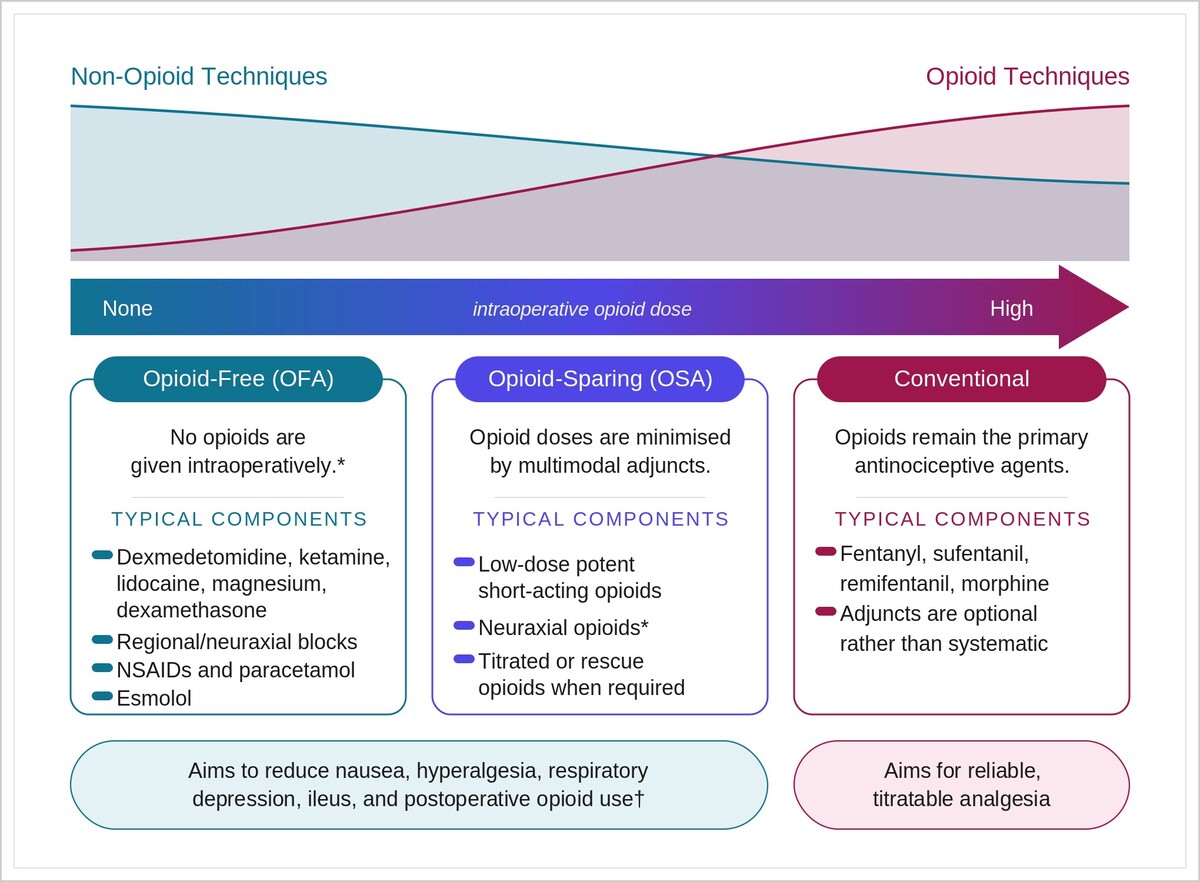
Figure 1 places OFA, OSA, and conventional anaes-thesia on the continuum of intraoperative opioid exposure.
FIGURE 1
Spectrum of intraoperative opioid use. Opioid-free anaesthesia (OFA), opioid-sparing anaesthesia (OSA), and conventional opioid-based anaesthesia lie on a continuum defined by intraoperative opioid dose. Non-opioid techniques (teal) and opioid techniques (bronze) vary reciprocally; the non-opioid contribution falls but remains substantial at the opioid-based end, reflecting that conventional anaesthesia may still be strongly multimodal. Typical components and the aims of each approach are shown below the corresponding zone
*Definitions of OFA vary. Strict definitions exclude intraoperative opioids by any route [9, 22]. However, the term has been applied inconsistently in some studies, including to regimens in which intraoperative opioids were administered [9].
†The most consistent reported benefit of opioid minimisation is less postoperative nausea and vomiting. Effects on pain and recovery are generally small or inconsistent, and some opioid-free protocols increase the incidence of bradycardia or hypotension [8, 21, 50, 56, 57].
Mechanistic basis of opioid minimisation strategies
Both OSA and OFA seek to reduce the burden associated with opioid-centred care while preserving adequate antinociception and postoperative recovery [8, 9, 19].
In OSA, opioids are repositioned as selective, titratable adjuncts within a broader multimodal strategy [4]. Rather than functioning as the dominant analgesic framework, they are used in small doses during predictable nociceptive “pain points” or as rescue therapy when non-opioid measures are insufficient. The intent is to preserve the favourable characteristics of opioids (especially their rapid anti-nociceptive and sympatholytic effect) while minimising cumulative exposure [4, 6].
In the more restrictive paradigm of OFA, non-opioid techniques replace functions traditionally provided by opioids, including attenuation of nociceptive and autonomic responses to surgical stimulation [8, 9]. While appealing in selected contexts, this approach necessarily places greater physiological and pharmacological demands on non-opioid adjuncts and regional techniques [22].
Opioid-induced hyperalgesia (OIH) provides a further, although uncertain, rationale for limiting exposure. OIH is a pronociceptive state in which opioids lower pain thresholds and may increase postoperative pain independently of surgical injury [65]. Proposed mechanisms include NMDA-receptor activation, central and peripheral sensitisation, glial activation with neuroinflammation, and impaired descending inhibition [65, 66]. The clearest clinical signal follows intraoperative remifentanil, for which higher doses have been associated with greater early postoperative pain and analgesic requirements [12, 66, 67]. Evidence remains inconsistent, and no preventive strategy has been established; reported approaches overlap with standard multimodal care, particularly ketamine or other NMDA-directed agents and avoidance of unnecessarily high opioid doses [26, 27]. OIH therefore supports dose restraint but should not be interpreted as proof that complete opioid avoidance is superior [6].
Multimodal analgesia: pharmacological and non-pharmacological strategies
Multimodal analgesia is the foundation of both OSA and OFA. In each approach, perioperative nociception is managed through combinations of agents and techniques acting at different levels of the pain pathway, with the goal of improving analgesia while reducing reliance on any single drug class [21, 23]. Contemporary perioperative guidance recommends that multimodal analgesia begin intraoperatively and continue into the postoperative period, integrating non-opioid systemic agents with regional techniques whenever feasible [6, 24].
Pharmacologically, OSA and OFA overlap considerably because they both rely on multimodal non-opioid regimens. Core components include paracetamol, non-steroidal anti-inflammatory drugs (NSAIDs) or cyclooxygenase-2 (COX-2) inhibitors, low-dose ketamine, a2-agonists such as dexmedetomidine or clonidine, intravenous lidocaine, magnesium sulphate, and dexamethasone. Gabapentinoids may be included in some protocols but are not considered core components because their analgesic benefit is limited and adverse effects remain a concern. Short-acting β-blockers such as esmolol are used in some protocols for sympatho-lysis and haemodynamic control. A 2026 systematic review and meta-analysis found reductions in peri-operative opioid consumption and early postoperative pain with esmolol, but substantial heterogeneity and uncertainty about later pain outcomes limit generalisability [64, 68].
Among systemic adjuncts, paracetamol and NSAIDs have the most consistent evidence for opioid- sparing effects [14–16, 25]. Ketamine reduces postoperative opioid consumption and may attenuate central sensitisation, but adverse effects may limit its use in some patients [26, 27]. Dexmedetomidine and clonidine provide analgesic-sparing and sympatholytic effects, but bradycardia and hypotension require careful consideration [28]. Intravenous lidocaine appears most beneficial in abdominal surgery [30, 31]. Dexamethasone also contributes to analgesia and may prolong the duration of regional anaesthesia when given intravenously [33]. Magnesium sulphate seems to enhance the effects of other analgesics and is included in some protocols, but with a more limited evidence base [21, 22]. Multimodal adjuncts are outlined in Table 1.
TABLE 1
Pharmacological agents and drug classes used in multimodal opioid-sparing anaesthesia (OSA) and opioid-free anaesthesia (OFA) protocols
| Agent or drug class | Principal mechanism | Perioperative role in OSA/OFA | Ref. |
|---|---|---|---|
| Paracetamol (acetaminophen) | Predominantly central effect; may reduce central prostaglandin synthesis through COX pathway modulation; potential additional serotonergic and endocannabinoid mechanisms | Foundational non-opioid analgesic that reduces baseline nociceptive input and is commonly combined with NSAIDs or COX-2 inhibitors when appropriate | [13, 15, 25] |
| NSAIDs/COX-2 inhibitors | Peripheral and central prostaglandin inhibition | Anti-inflammatory and opioid-sparing; useful unless contraindicated by bleeding, renal, or gastrointestinal risk | [14–16] |
| Ketamine (low dose) | NMDA receptor antagonism | Reduces acute postoperative opioid requirements and may limit sensitisation-related pain amplification; evidence for reducing persistent postsurgical pain remains low certainty and inconsistent | [26, 27, 80] |
| α2-agonists (dexmedetomidine, clonidine) | Central sympatholysis; activation of descending inhibitory pathways | Opioid-sparing and sympatholytic; useful in some OSA/OFA regimens but limited by bradycardia and hypotension | [28, 29, 42] |
| Dexamethasone | Glucocorticoid anti-inflammatory effect; antiemetic action | Common adjunct with a small analgesic and opioid-sparing effect plus established antiemetic benefit | [14, 15, 33] |
| Intravenous lidocaine | Sodium-channel blockade; anti-inflammatory and antihyperalgesic effects | Procedure-specific opioid-sparing adjunct, mainly in abdominal surgery; concurrent regional analgesia may be limited by cumulative local-anaesthetic dose and toxicity risk | [30, 31, 81] |
| Magnesium sulphate | NMDA antagonism and calcium-channel effects | May provide modest opioid sparing, but evidence is heterogeneous and less established than for core adjuncts | [21, 32] |
| Gabapentinoids (gabapentin, pregabalin) | α2δ subunit modulation of voltage-gated calcium channels | Previously incorporated into multimodal regimens; no longer regarded as core components because of limited analgesic benefit and adverse effects | [34, 35] |
| Esmolol | Short-acting β1-adrenergic antagonism | Provides sympatholysis and haemodynamic control and may reduce perioperative opioid use and early postoperative pain; heterogeneous evidence and uncertainty about later outcomes limit generalisability | [32, 42, 66, 70] |
TABLE 2
Selected procedure-specific regional and local analgesic strategies within multimodal perioperative pathways
| Procedure | Regional or local analgesic technique | Procedure-specific rationale/ evidence summary | Ref. |
|---|---|---|---|
| Open colorectal surgery | Thoracic epidural analgesia; if not feasible, bilateral TAP block, intravenous lidocaine, or postoperative continuous preperitoneal infusion | PROSPECT recommends epidural analgesia for open colectomy; the listed alternatives are recommended when epidural analgesia is not feasible | [82, 83] |
| Minimally invasive colorectal surgery | Laparoscopic- or ultrasound-guided TAP block | Laparoscopic- and ultrasound-guided approaches have similar 24-hour opioid consumption and pain outcomes; certainty is low to very low | [37, 82, 84] |
| Major open HPB surgery | Thoracic epidural analgesia (TEA) | Established option with effective analgesia, but recent evidence reports more hypotension than with continuous wound infiltration | [38, 85, 86] |
| Major open HPB surgery | Continuous preperitoneal or wound infiltration | Non-inferior to TEA for early pain after open pancreatoduodenectomy; may reduce hypotension and improve recovery, although TEA may reduce opioid consumption | [38, 85, 86] |
| Radical cystectomy (open) | Individualised multimodal opioid-sparing analgesia; epidural or another regional/ local technique selected case by case | The current ERAS update supports opioid-sparing protocols but reached no consensus on routine epidural analgesia | [39, 87] |
| Radical cystectomy (robot-assisted/laparoscopic) | Local infiltration or a fascial-plane block, selected case by case | May support opioid-sparing ERAS pathways; evidence does not establish a single routine regional or local technique | [39, 87] |
| Mastectomy | Fascial-plane or paravertebral block | Reduces pain and/or opioid requirements in the first 24 hours; current evidence does not establish one consistently superior regional technique | [40, 82, 88] |
| Lumbar fusion surgery | Wound infiltration or selected neuraxial/locoregional techniques | ERAS supports multimodal opioid-sparing analgesia; wound infiltration is strongly recommended, whereas locoregional blocks receive a weaker recommendation | [41] |
| General principle | Procedure-specific regional or local analgesia where supported by evidence, patient factors, and expertise | Integrate regional and local techniques into multimodal pathways rather than applying one technique universally | [6, 14, 82] |
Buprenorphine occupies a distinct position within an opioid-sparing, but not opioid-free, stra-tegy. Its high μ-receptor affinity, partial μ-agonism, k-receptor antagonism, and proposed anti-NMDA activity have been linked to antihyperalgesic effects [69]. In an experimental human pain model, its antihyperalgesic effect was more pronounced and longer lasting than its analgesic effect, unlike that of full μ-agonists [70]. A low-dose perioperative infusion also reduced secondary hyperalgesia around the incision compared with equianalgesic morphine in patients receiving remifentanil for major lung surgery, but the difference did not persist at three months [71]. Because buprenorphine remains an opioid, it is incompatible with strict OFA and belongs, if used, within an opioid-sparing strategy [6, 9, 19]. Evidence remains too limited to support routine prophylaxis against OIH.
Reducing opioid exposure may shift, rather than eliminate, the adverse-effect burden. In OFA studies, haemodynamic events such as bradycardia and hypotension are among the most frequently reported complications, especially in protocols heavily reliant on dexmedetomidine or clonidine. This trade-off should be made explicit in any discussion of OFA efficacy and safety [21, 29, 36].
Non-pharmacological measures can complement a multimodal pathway. Music is the best stu-died example: it is inexpensive, simple to deliver, and can be used before, during, or after surgery. Meta-analyses of randomised trials report modest reductions in postoperative pain, anxiety, and anal-gesic use [72, 73]. Other options include preoperative education, relaxation, massage, acupuncture or acupressure, and transcutaneous electrical nerve stimulation [74, 75]. A Cochrane review found possible small benefits from psychological preparation, but the evidence was heterogeneous and of low or very low quality; evidence for physical methods is similarly procedure specific [75–77]. These methods should supplement rather than replace pharmacological and regional analgesia. Where resources and patient preference permit, they can be offered as optional components of an ERAS pathway.
Regional anaesthesia as a core component of OSA and OFA
Regional anaesthesia, spanning neuraxial blocks, peripheral nerve and fascial plane techniques, and local infiltration, remains one of the most effective tools for perioperative opioid reduction and should be considered whenever the procedure and clinical setting allow [14–16]. Its importance is amplified in OFA, where it often provides the primary source of nociceptive control rather than simply supplementing systemic analgesia [21]. The choice of technique is inherently procedure specific, guided by the expected pain distribution, surgical approach, and recovery priorities [37–41]. If a block is incomplete or technically not feasible, the two strategies diverge: OSA retains opioids as a titratable safety net, while OFA must compensate with additional non-opioid adjuncts or deeper anaesthesia [42].
In practice, the feasibility of protocols that rely on regional techniques depends on operator expertise, access to appropriate equipment, careful patient selection, and perioperative workflows that allow their reliable and efficient integration into care [9, 43]. Nonetheless, regional anaesthesia is well established within ERAS pathways across a range of surgical specialties. Table 2 provides an overview of the techniques currently used in these protocols.
Most OFA definitions exclude systemic, neuraxial, and intracavitary opioid administration alike [8, 9, 22]. Adding an opioid intrathecally or epidurally therefore technically places a protocol outside the OFA definition, despite the substantially lower doses and limited systemic absorption involved. Whether it is clinically justified to group low-dose neuraxial opioids with systemic administration has not been specifically addressed in the OFA literature, and future refinements of OFA criteria may need to account for the distinct pharmacokinetics of neuraxial delivery [10] and the consi-derable variability among neuraxial opioids themselves [9, 18].
Practical challenges, training, and monitoring
Translating these pharmacological strategies into routine practice raises distinct challenges for each approach. OFA is considerably more demanding to deliver: managing multiple concurrent infusions with competing haemodynamic effects, compensating for the absence of opioid-based anti-nociception, and often relying on regional techniques that require additional expertise and infrastructure all place demands that exceed standard anaesthetic practice [42, 44].
OSA presents a different challenge: finding the right balance between opioid reduction and ade-quate analgesia. If opioid doses are too low, pain control may be insufficient; if too high, the benefits of opioid minimisation are lost. The success of OSA therefore depends on consistent application of multi-modal protocols and institutional adherence to opioid-sparing pathways, both of which may be variable in routine practice [45].
Patients with chronic pain or long-term opioid therapy require individualised planning rather than routine application of OFA. Preoperative assessment should establish baseline opioid use, tolerance, dependence, or opioid use disorder, with pain or addiction input when needed. Established therapy should not be stopped abruptly; buprenorphine should not routinely be discontinued. Multimodal and regional techniques should be maximised, but titrated rescue opioids may still be necessary. OSA is therefore often more practical than strict OFA, with coordinated postoperative return to the baseline regimen or an agreed taper [46, 47].
Training requirements also differ. OFA often demands more advanced regional anaesthesia skills and greater confidence in titrating multiple agents. OSA may be more easily implemented within standard anaesthetic practice, provided that multimodal strategies are applied systematically rather than selectively [43].
Careful intraoperative monitoring remains important in both approaches because the use of different analgesic adjuncts may alter the usual relation between nociception, haemodynamic responses, and anaesthetic depth. Processed EEG indices may help guide hypnotic administration, but their interpretation can be affected by adjuncts such as ketamine, which may increase BIS values independently of anaesthetic depth [48]. Objective nociception monitors have been developed to guide analgesic titration, but their role in OFA protocols remains insufficiently validated [49, 50]. Available trials are not large enough to assess awareness reliably. Careful titration and appropriate monitoring therefore remain important when opioids are reduced or omitted [51].
Evidence comparing OSA and OFA
Across different surgical populations, current evi-dence suggests that both OSA and OFA can provide analgesia broadly comparable to traditional opioid-based anaesthesia. The most consistent benefit signal is improved tolerability (especially lower rates of PONV) rather than a large or clinically meaningful reduction in postoperative pain intensity [8, 21, 52].
In mixed non-cardiac surgery, randomised trials generally show small differences in acute pain scores and modest or inconsistent differences in postoperative opioid consumption, depending on how OFA or OSA is defined and implemented. Adjunct selection, regional anaesthesia, antiemetic prophylaxis, and rescue analgesia policies all influence these outcomes [19, 21, 53].
Procedure-specific data provide additional nuance. In cardiac surgery, OSA pathways incorporating multimodal analgesia and regional techniques have been associated with lower opioid exposure and earlier physiological recovery, without clear mortality benefit [54].
In thoracic surgery, some meta-analytic data suggest that OFA may reduce postoperative opioid requirements and complications, but heterogeneity and the confounding effect of regional anaesthesia intensity limit the certainty of these findings [55]. The emphasis on multimodal and regional techniques within such protocols may also be relevant to the prevention of chronic postsurgical pain, which remains clinically significant even after minimally invasive thoracic procedures [14, 56]. A recent feasibility study of opioid-free intraoperative management for VATS, built around thoracic paravertebral block with postoperative patient-controlled oxycodone and non-opioid adjuncts, suggests that such protocols can be implemented in this specific surgical context [57].
In orthopaedic surgery, OFA may reduce PONV but does not consistently improve pain or opioid consumption and may increase bradycardia risk [58]. In bariatric surgery, OSA and OFA appear to provide similar analgesia, whereas OFA may reduce early PONV at the cost of greater haemodynamic instability [59]. In breast surgery, both OSA and OFA may improve early quality-of-recovery measures compared with opioid-based anaesthesia; however, OSA may provide a more balanced overall profile whereas OFA may perform best for PONV reduction [60].
These findings point to different risk–benefit profiles rather than clear superiority of either approach [19]. OFA is repeatedly associated with less PONV, but also with more bradycardia and, in some settings, greater need for haemodynamic intervention [19, 55]. OSA, by retaining opioids as a safety net, may reduce the risk of undertreatment during pe-riods of intense nociception or incomplete regional blockade, even if it does not achieve the same degree of opioid-related adverse-effect reduction [18, 54].
Clinically meaningful outcomes may depend less on the label than on the quality of the periope-rative pathway. The strength of the multimodal regimen, adequacy of regional blockade, explicit rescue algorithms, and postoperative opioid stewardship may be more important than whether intraoperative opioid exposure is merely minimised or reduced to zero [15, 43].
Patient-reported outcomes are particularly rele-vant in this context. Equivalent pain scores may coexist with important differences in nausea, sedation, mobilisation, sleep quality, and overall quality of recovery. Future comparative studies should therefore place greater emphasis on validated patient-reported and function-centred outcomes [53, 61].
Limitations of current evidence and future directions
The evidence is difficult to interpret because the interventions are heterogeneous. Trials and meta-analyses differ widely in drug combinations, dosing strategies, infusion schemes, regional anaesthesia use, comparator regimens, and rescue protocols [62, 63]. Pooled analyses may therefore combine interventions that share a label but not a standardised anaesthetic approach.
A major methodological problem is the lack of uniform definitions, particularly for OFA. In some studies, OFA refers only to avoidance of systemic intraoperative opioids; in others, postoperative rescue opioids are still allowed and postoperative opioid consumption remains a principal endpoint [9, 18, 21, 23]. This inconsistency complicates interpretation and weakens the external validity of pooled estimates.
Another limitation is the frequent emphasis on short-term outcomes such as pain scores at 24 hours, early opioid consumption, or PONV [6, 62, 63]. Outcomes that may be more meaningful to patients and health systems are reported less consistently. These include functional recovery, chronic postsurgical pain, persistent opioid use, return to normal activity, and health-care utilisation.
Evidence from controlled trials may not translate readily into routine practice. OFA often requires infusion-based regimens, closer monitoring, strong protocol familiarity, and more advanced regional anaesthesia expertise, which may not be readily available across institutions. OSA may be more adaptable, but direct comparisons of implementation, workflow burden, cost-effectiveness, and training requirements remain limited.
Generalisability across patient populations is also limited: most OSA and OFA trials have enrolled opioid-naïve patients, leaving little guidance for those with chronic opioid use or opioid use disorder, who present distinct challenges including tolerance, altered nociception, and withdrawal risk [6, 14, 19].
Patient preferences remain poorly studied. Therecently published PERFECT trial protocol reflects growing interest in whether patients hold preferences regarding intraoperative opioid exposure, rather than postoperative opioid use alone [64].
Qualitative perioperative data also suggest that opioid-free and opioid-based pathways may differ in how they are experienced by patients, highlighting aspects of care that may not be fully captured by conventional clinical endpoints [65].
Future research should prioritise standardised definitions of OSA, OFA, and opioid-free analgesia; harmonised, patient-centred outcomes; adequately powered safety analyses; inclusion of patients with chronic opioid use or opioid use disorder; and pragmatic prospective studies assessing implementation and generalisability in real-world perioperative settings.
Conclusions
OSA and OFA are related strategies within multimodal perioperative care rather than competing ideologies. Current evidence supports minimising opioid exposure, but not routine complete avoidance. Outcomes appear to depend more on pathway quality than on whether intraoperative opioids are reduced or eliminated. Concern about OIH is a further reason to avoid unnecessarily high doses, especially of remifentanil.
In routine practice, OSA appears more adaptable because it preserves opioids as selective, titratable tools within an otherwise opioid-minimising pathway. OFA is feasible and may be advantageous in selected patients or procedures, particularly when reducing opioid-related adverse effects such as PONV is a priority, but its success depends heavily on protocol design, adjunct selection, regional anaesthesia, monitoring, and clinical expertise. Current evidence does not show consistent superiority of OFA for early postoperative pain, and some OFA protocols may shift the adverse-effect profile towards bradycardia, hypoxaemia, or haemodynamic instability.
Perioperative practice should therefore move beyond categorical debates over “opioid-free” versus “opioid-based” anaesthesia and emphasise individualised opioid stewardship within clearly defined multimodal pathways. Until more standardised and pragmatic evidence becomes available, the choice between OSA and OFA should be guided by patient factors, procedure type, available expertise, and the structure of the perioperative pathway as a whole.